
 With an unbeaten record and a historic three Masters clay titles leading up to Paris, victory seemed a mere formality for Rafael Nadal at the French Open. Still, with Robin Soderling, the only rival to defeat Nadal at that venue as his finals’ opponent, an interesting twist was added to the plot. Irrespective of the challenger, Nadal demonstrated that he is the master on this surface. The Spaniard triumphed 6-4,6-2,6-4 to claim his fifth “Coupe des Mousquetaries” and recapture the number one ranking.
Soderling commenced the first set with a couple of unfettered games. Then, with a forehand down the line error by Nadal had break point. However, Nadal got to deuce when Soderling’s backhand traveled out of play. With Soderling donating two forehand mistakes, Nadal equalized the set at 2 all. Promptly, when Soderling made another forehand error, Nadal had his initial break point. Despite Soderling dismissing one, Nadal obtained a second and capitalized with a backhand crosscourt pass for winner. Quickly, Nadal consolidated to widen his advantage to 4-2. In the next game, Soderling double faulted on game point resulting in deuce and later gave Nadal two additional opportunities to break. Yet, the Swede maintained his composure to pull off the game and remain one break down. When Nadal himself double faulted, Soderling had break point. But, on a forehand miscue by Soderling, Nadal rubbed out that previous error. A second break point came along after Soderling crushed a second serve return and Nadal was unable to deal with the subsequent shot. Yet, with Soderling gifting another error, Nadal won the point. Thereafter, Nadal secured the game and eventually seized the set 6-4.
After Soderling’s uncomplicated game to open the second set, on an errant forehand by Nadal, the Swede had double break point. With an ace and a botched backhand by Soderling, Nadal reached deuce. Soderling manufactured two more opportunities. Nevertheless, each was snuffed out by Nadal to tie the set at 1. Soderling short memory helped as he held at love right after. Nonetheless, Soderling’s next time out, Nadal connected on a couple of winners for triple break point. When the Swede misfired with the forehand up the line, Nadal broke for 3-2. Later, with a glut of mistakes, Soderling handed Nadal a double break lead. The Spaniard easily closed out the set at 6-2.
Unlike last year, for Soderling, the errors far exceeded the winners. Moreover, the serve, a potent part of Soderling’s game was being neutralized by Nadal’s excellent defense. Conversely, as the match progressed, Nadal cleaned up his game. Following an ace for game point, Soderling committed another error for deuce. With two consecutive forehands flubs by Soderling, Nadal bagged the break to begin the third set. By charging to net, Soderling forced Nadal to place a backhand pass out of play for his eight break point. Yet, by netting the backhand return, Soderling was now 0 for 8 on break points. Eventually, Nadal guarded serve for a 2-0 edge. The next couple of service games, Soderling comfortably held. When the Swede double faulted in the seventh game, Nadal had another break point. Still, Soderling dealt with the pressure and maintained serve for 3-4. But, Soderling was given no further looks at a break point by Nadal. As the mistakes flew off Soderling’s racket, Nadal promptly held the rest of the way to take the championship in straight sets.


 Nothing is impossible! This was the phrase on the t-shirt worn by Francesca Schiavone’s family and friends today in the French Open final. Schiavone proved the axiom by surprising Samantha Stosur 6-4, 7-6 to grab her first career major. Moreover, Schiavone stenciled her name in history by becoming the first Italian female to prevail at a major.

 The first week of play has come to a conclusion at the French Open. While Andy Murray, the fourth seed, going out in the fourth round to Tomas Berdych was a shock. The biggest eye popper was David Ferrer, the ninth seed, a definite threat to Rafael Nadal in the bottom half, being ousted in the third round in three sets by Jurgen Melzer. With both Roger Federer and Nadal methodically working through their sections, the possibility of a final between these two is very much alive.

 The sun has set on a the first week at the French Open. As usual there were upsets, many of them expected. However, Serena Williams and Justine Henin, two pre-tournament favorites, have not disappointed. As such, the much touted quarterfinal encounter between these rivals is one round away. Here is a synopsis of the main developments of the initial days.

 In front of a partisan crowd at the Open de Nice Cote D’Azur, Richard Gasquet upset world number 9 Fernando Verdasco 6-3,5-7,7-6 to win his first ATP title since Mumbai in 2007 and the sixth of his career.

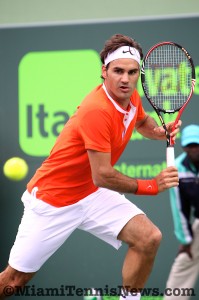 On Sunday, the 2010 French Open gets underway. Before the first ball is struck at Roland Garros, here’s a taste of how the proceedings may unravel on the gentlemen’s side.

 Today, the French Open draw was revealed. Because Serena and Venus Williams are the top two seeds, the possibility of an all Williams final exists. However, with Justine Henin, a four time champion, a potential quarterfinal rival for Serena and Venus perhaps seeing Aravane Rezai or Nadia Petrova in the round of 16, the list of spoilers is extensive. Here’s a snapshot of the likely key match-ups which may eventually determine the victor.

 For the second consecutive week, an unseeded player rules at a premier clay event. In the finals of the Mutua Madrilena Madrid Open, Frenchwoman Aravane Rezai stunned world number three Venus Williams. Rezai prevailed 6-2, 7-5 over Williams to capture the grandest title of her blooming career.

 By virtue of prevailing in their last four meetings, Samantha Stosur, the 4th seed and world 11th, was favored to win over Vera Zvonareva seeded 7th and ranked 22nd in the Family Circle Cup final. However, Stosur’s 1-6 record in finals left plenty of room for pause. With ten titles under her belt including one this year, Zvonareva had experience on her side. Still, Stosur obliterated her prior performances from her mind and crushed Zvonareva 6-0,6-3 to become the first Aussie to conquer Charleston.

 The remaining two women singles semifinal slots will be assigned today at the Sony Ericsson Open. In addition, the men get their singles quarterfinal round under way.