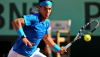
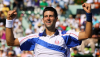
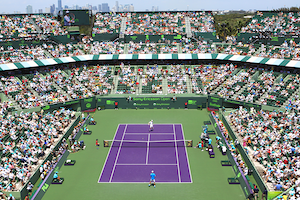
Novak Djokovic kept his winning streak and perfect season alive today. Djokovic defeated Rafael Nadal in the final of the Sony Ericsson Open 4-6, 6-3, 7-6 to win his second title in Miami and his fourth consecutive of the season.
It was the second week in a row that Nadal and Djokovic, world number one and two respectively, were meeting in a Masters 1000 final. The last time the top two players clashed for the title at this tournament in1995, number two Andre Agassi beat number one Pete Sampras in a third set tiebreaker.
With a backhand up the line pass for a winner on his second break point opportunity, Nadal obtained a 2-1 advantage. It was the first time, Djokovic had dropped serve this tournament.
After going down double break point, Nadal found the equalizer. The Spaniard survived another break point before consolidating for 3-1.
Then, Nadal captured a second break for 4-1. The Spaniard salvaged another break point before widening his lead to 5-1. Nadal dropped serve trying to close out the set the first time around. But, despite difficulties, on his second attempt Nadal banked the set.
After wasting multiple break points in the initial set, Djokovic aided by errors from Nadal seized the break for 2-0 in the second. Subsequent to wiping out a break point, Djokovic consolidated for 3-0 when Nadal’s slice backhand found the net.
Djokovic pressured Nadal on serve while having an easier time himself. At 40-0, Djokovic sent a beautiful lob for a winner to stretch his gap to 4-1. Ultimately, with an ace on triple set point, Djokovic threw the gauntlet for a deciding set.
The opening game of the third, Nadal overcame love-30 to hold. Serving at 1-2, Djokovic battled a similar predicament and got to 2 all. As the set progressed, despite a few 15-30 or 0-30 games, neither manufactured a break point. Fittingly, the championship was settled by a tiebreaker.
The first four points of the tiebreaker, neither competitor maintained serve. When Nadal double faulted, Djokovic had a mini-break at 3-2. With Nadal’s next two strokes sailing wide, Djokovic had a 5-2 cushion.
Following, Djokovic struck a forehand winner down the line for 6-2 and four championship points. Although Nadal won the next two points, on his third opportunity, Djokovic connected on forehand winner to pocket the trophy.
Read the full story











 It was a rematch of this year’s Australian Open final with the same result. Victoria Azarenka crushed Maria Sharapova 6-2, 6-3 to win her fourth title of the season and maintain an unblemished 23-0 record.

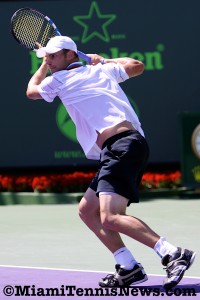 The Delray Beach International Tennis Championships singles’ draw has been released with American John Isner as the top seed.

 In a thrilling five set, five hour and fifty-three minute combat, Novak Djokovic halted Rafael Nadal 5-7,6-4,6-2,6-7,7-5 to earn his second consecutive Australian Open trophy, the third of his career.

 The 2012 Australian Open marks a bevy of milestones for Victoria Azarenka. The Belarusian reached her first final at a major. Moreover, by defeating Maria Sharapova 6-3,6-0, Azarenka claims her maiden major and will ascend to the number one spot for the first time.

 The Williams sisters made their long awaited return to competitive tennis this week. Despite being rusty, with nine of the last eleven championships at the All England Club, Venus and Serena are among the favorites. Moreover, the Wimbledon draw sets up the potential for a fifth all Williams final. Here’s a more detailed analysis.