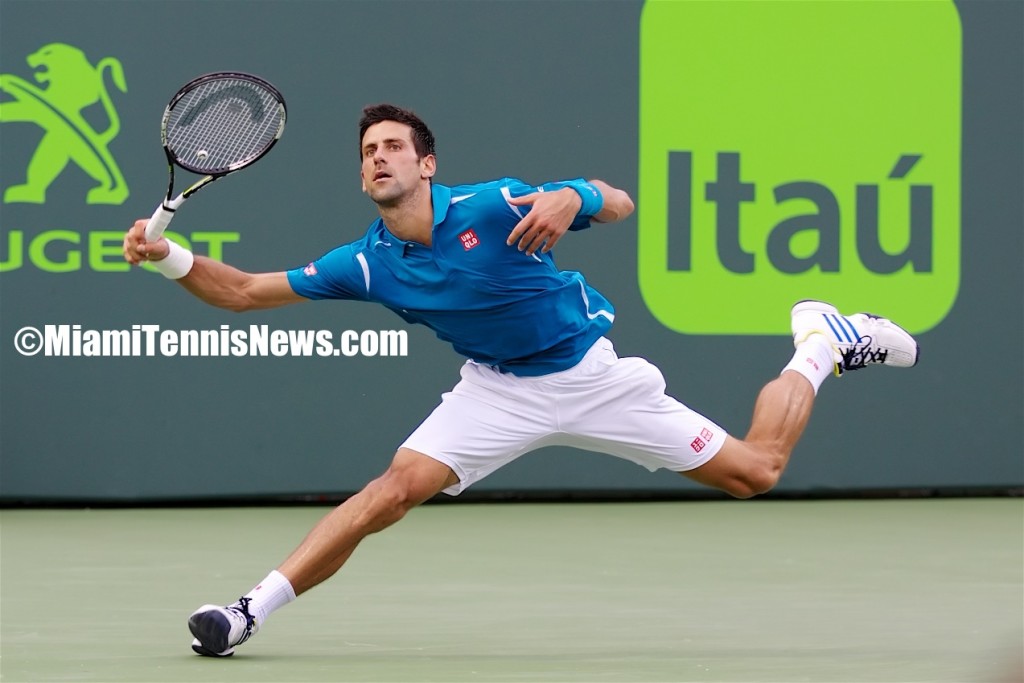
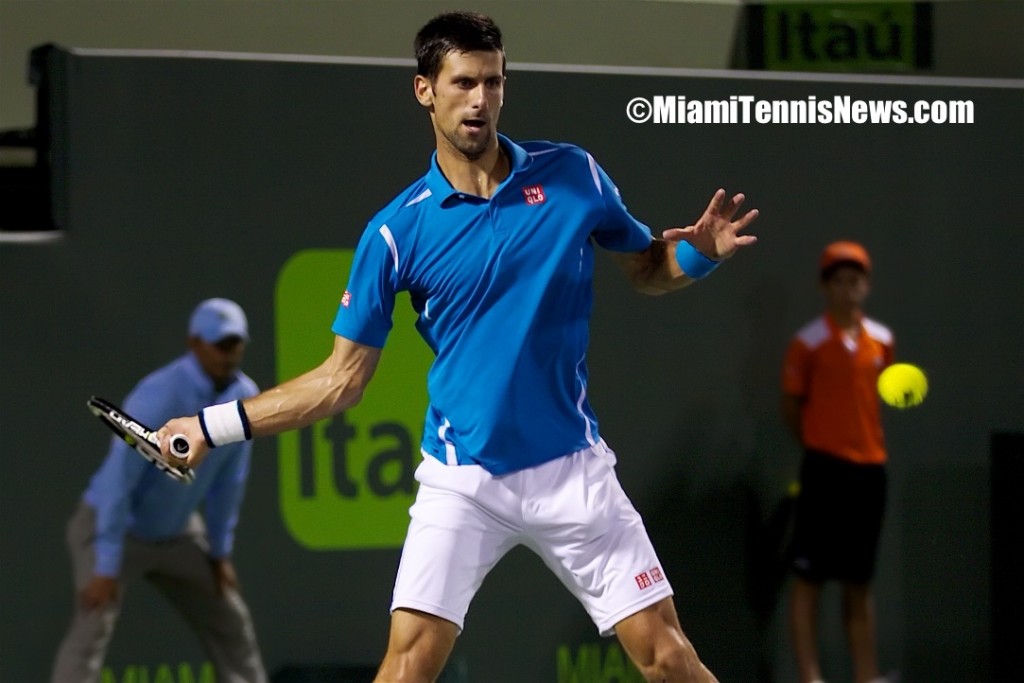
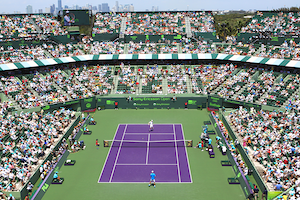
In 2002, Pete Sampras capped his illustrious career by claiming his 14th major at the U.S. Open, a number which seemed insurmountable for future generation at the time. Today, Novak Djokovic downed Juan Martin Del Potro 6-3, 7-6, 6-3 to hoist the U.S. Open trophy, tying Sampras’ record.
What was suppose to be a routine seventh service game for Del Potro, up 40-0, turned into a nightmare as Djokovic induced a series of miscues to seize the break. Quickly, with an uneventful hold, the Serb sealed the first set.
On the surface, it was a straight sets victory. However, the match was anything but straightforward. After Djokovic broke in the opening game of the second set, Del Potro returned the favor in the fifth game. Up 4-3, the Argentine could not penetrate Djokovic’s formidable defense. Consequently, the Serb dismissed three break points in an eighth game which lasted 20 minutes. The set was decided by a tiebreaker. After the initial three points went against the server, Del Potro finally gained a 3-1 advantage with a forehand down the line winner. Yet, with the same stroke misfiring, the players were back on serve. With two consecutive errors on serve, Del Potro went down 4-5. As the Argentine’s forehand, his most ominous weapon, deserted him, a 95 minutes set terminated with Del Potro netting a crosscourt forehand.
Again it was Djokovic pocketing the early break for 3-1 in the third set. Still, Del Potro clawed his way back and ultimately levelled the score. Djokovic’s steady play put an end to Del Potro’s two game streak and the Serb moved ahead 4-3. Promptly with a forehand flub and a double fault, Del Potro stared at double break point. As the Argentine’s backhand sailed wide, Djokovic secured the 5-3 lead. Soon, a forehand down the line winner gave Djokovic match point. It was all the Serb needed as he struck an overhead winner to conclude the set and nab his third championship after 3 hours and 15 minutes.
A chant broke out from his horde of fans as the 2018 finalist stepped up to the mic during the trophy ceremony. Del Potro cited “it’s not easy to speak right now, but I love you too guys. I’m so happy to be playing the final against this magnificent idol. He is one of my friends on tour, he knows if there is one player I want to watch winning title is him. Of course, I’m sad because I [loss], but I’m happy for Novak and his team as well. You deserve to win”.
For Del Potro, the 2009 U.S. Open titlist and world number three, it’s been a long journey to his second major final. With multiple wrist surgeries, there was doubt that he would ever return to this caliber of tennis. He expressed “I never gave up. . . I was trying to fix all my injuries to be back here, I got it after nine years which is amazing to me because the U.S. Open is my favorite tournament on tour and I am very proud for that”.
Always one to look at the glass more than half full, Del Potro conveyed in Spanish “I want to thank my team, all those who have helped me to get to this stage, my friends, all the people who have supported me. Even from those in Argentina, I could feel the energy. Lastly, I believe at times one can win or lose a tournament, but the love of the people is worth as much as this trophy. I already have this trophy, so I’ll take away with me the love from all of you”.
Post elbow surgery in March, Djokovic was an average player. A semifinal run in Rome where he fell to Rafael Nadal improved his record to 7-6. After an unexpected ousting by Marco Cecchinato in the quarterfinals at Roland Garros, Djokovic may have hoped, yet, it would hard to imagine that he’d bank on triumphs at both Wimbledon and the U.S. Open. He credits his resurgence to the “support of the love ones, my kids, my wife, my team, a small group of people that has been with me through difficult times as well. When I had the surgery this year, I could truly understand what Juan Martin was going through. . . You learn from adversity. . . I tried to take the best out of myself in these moments.”
What does this title signify for Djokovic, equaling Sampras’ feat, third on the all time list “I was hoping he was going to be here tonight, Pete you are my idol and I love you”. Moreover, Djokovic stated “I want to congratulate Juan Martin for what he has done, coming back last five years, having faith and belief in himself that one day he will be a top player. I wish him all the best. I know he is going to be here again with the champion trophy”.
With Nadal retiring in the semifinals with a knee injury after being down 2 sets to Del Potro, his future is uncertain. Thus, with this win, Djokovic gains traction, moving from a ranking of six to top three. As such, he has a realistic shot at ending as the year end number one.